Flounder Fishing Charters
Seattle / Puget Sound Washington

How To Fish For Flounder In Puget Sound
Imagine you are going on a treasure hunt in the middle of a giant forest.
The Flatfish Safari: Fishing for Flounder on a Puget Sound Charter
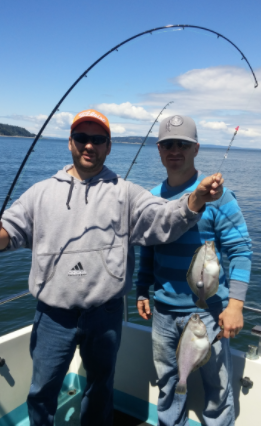
While the towering dorsal fins of King Salmon often steal the spotlight in the Pacific Northwest, there is a specialized “treasure hunt” happening right on the ocean floor. Flounder fishing on a Puget Sound charter is a masterclass in precision and patience. These “masters of disguise” don’t roam the open water; they stay glued to the sandy basements of the Sound. On a charter, we trade the high-speed chase of the salmon for a tactical, slow-motion sweep of the underwater “fields.”
Here is how a professional charter boat targets these tasty, camouflaged flatfish in the neighborhood of the Puget Sound.
The Strategy: The Controlled Drift
The most important tool a charter captain has for flounder isn’t the rod—it’s the boat’s position. Flounder are ambush predators. They bury themselves in the sand with only their eyes poking out, waiting for a meal to be delivered by the current. On a charter, we use a method called the Controlled Drift.
Instead of anchoring in one spot and hoping a fish finds us, we use the wind and the tide to push the boat slowly over vast “sandy neighborhoods.” By keeping the boat moving at about 0.5 to 1.0 knots, we can present our bait to thousands of flounder in a single afternoon. If the drift is moving too fast due to the wind, we deploy a “sea anchor” (a large underwater parachute) to slow us down, ensuring your bait stays on the “floor” where the action is.
The Gear: The “High-Low” Neighborhood
Because flounder have much smaller mouths than a King or a Lingcod, we scale everything down for this fishery. On a charter, we provide light-action spinning or baitcasting rods that let you feel the subtle “tap-tap” of a flatfish.
-
The Rig: We use a “High-Low” Rig (sometimes called a spreader bar). This setup features two small, sharp hooks positioned at different heights above a heavy lead weight. This allows us to offer two “snacks” at once, doubling our chances of a strike.
-
The Bait: Flounder are driven by their sense of smell. We use “cocktails” of small pieces of squid, shrimp, or scented artificial baits. These create a “scent trail” that drifts down-current, ringing the dinner bell for any flounder hiding in the sand.
Finding the “Sandy Porch”
A great charter captain knows that flounder are picky about their “real estate.” They don’t like the rocky “thickets” where Lingcod live because they can’t bury themselves there. On the charter, we use high-definition sonar to find the “Transition Zones”—where the rocky reef ends and the smooth, sandy flats begin.
We typically hunt in depths of 40 to 90 feet. Using our electronics, we look for “hard bottom” vs. “soft bottom” readings. We want that soft, sandy floor where flounder can easily camouflage. Once we find a productive “porch,” we mark it on the GPS and repeat the drift until the fish box is full.
The “Tap-Tap-Lift” Technique
Fishing for flounder is all about the “feel.” When you are on the deck, you’ll keep your weight bouncing lightly off the bottom. A flounder hit doesn’t feel like a hard strike; it feels like your weight has suddenly become “sticky” or heavy.
-
The Secret: When you feel that “tap-tap,” don’t jerk the rod! Give the fish a second to fully inhale the bait.
-
The Set: Instead of a violent hook set, simply lift the rod tip firmly and start reeling. Because flounder are flat and broad, reeling them up feels like pulling a small dinner plate through the water—lots of resistance and a fun, pulsing fight all the way to the surface.
The Reward: The Poor Man’s Halibut
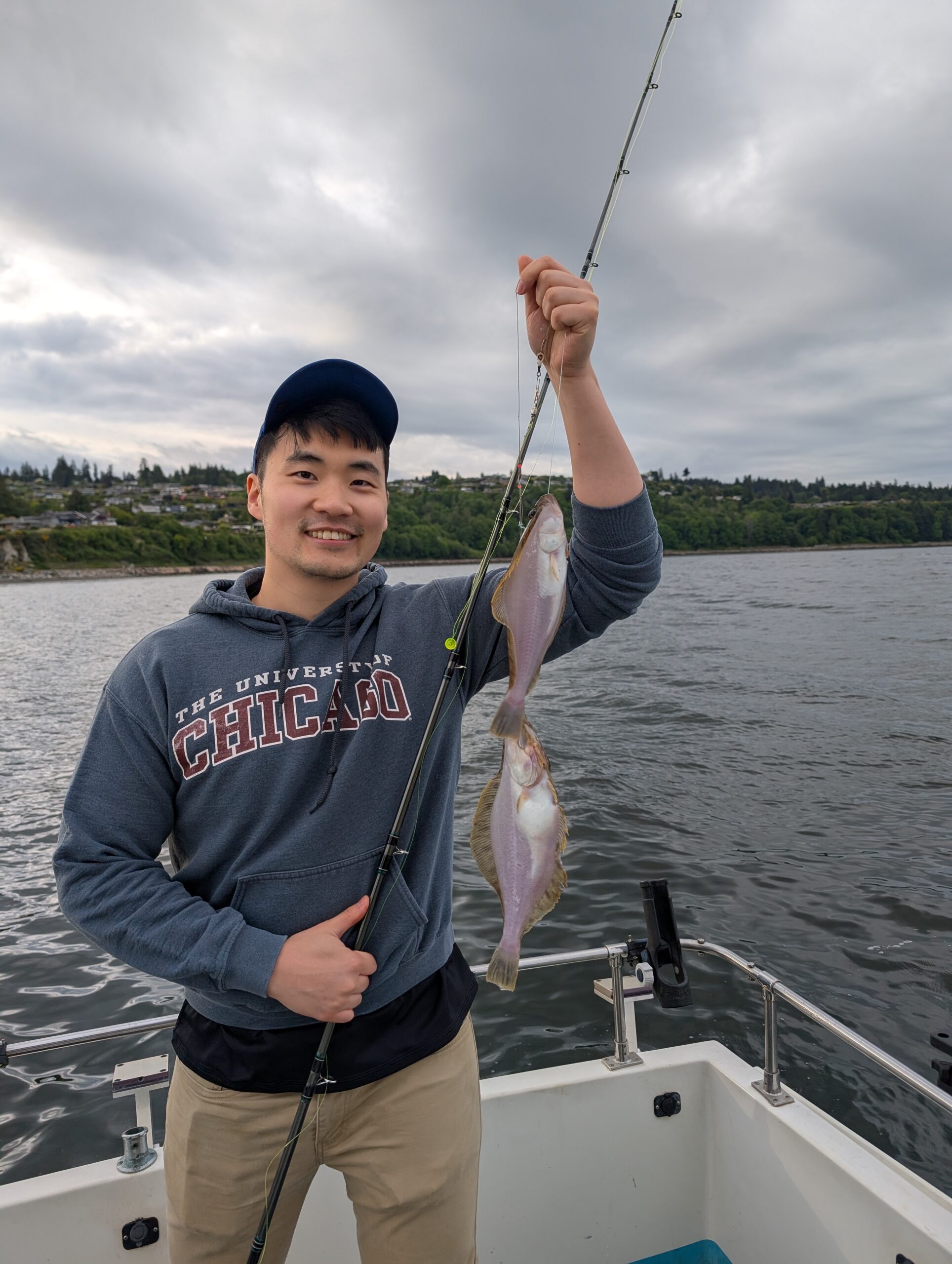
By the end of the trip, a flounder charter usually results in a bounty of “silver dollars.” These fish are prized for their incredibly mild, flaky white meat. Once cleaned you have a perfect, skinless fillets that are ready for the frying pan the moment you get home. It is a relaxing, high-action way to experience the hidden treasures of the Puget Sound floor.
FAQ’s
Is flounder fishing a good option for people who get seasick?
It’s the perfect option. We fish for flounder on flat, sandy bottoms in highly protected shallow waters right off the Edmonds shoreline. Because we aren’t exposed to heavy ocean swells, the water is calm, making it ideal for anyone worried about motion sickness.
What is the limit on flounder, and do we get to keep them?
Flounder fall under the general “Bottomfish” regulations in the Puget Sound, which boasts a highly generous daily limit of 15 fish per person with no minimum size limit. You can absolutely keep them, and we will clean them for you at the dock.
What type of tackle do we use to catch them?
We use ultra-light spinning rods with simple bait rigs dropped straight to the bottom. Because the gear is so light, feeling the fish peck at the bait and reeling them up is incredibly fun and easy for toddlers and seniors alike.
How fast is the action on a flounder trip?
It is usually non-stop. Flounder are highly competitive bottom feeders. It is very common to hook a fish within 30 seconds of your weight hitting the sand, resulting in dozens of fish caught over a short morning or afternoon charter.
How do you cook Puget Sound flounder?
Flounder and Sanddabs provide delicate, sweet, white flaky meat. They are best prepared by panning-frying them in butter, tossing them in light fish-and-chips batter, or rolling the fillets up with a little crab meat stuffing.
Captain Chris Hoag

How To Prepare Flounder
From Sea to Skillet: The Ultimate Guide to Preparing and Cooking Fresh Flounder
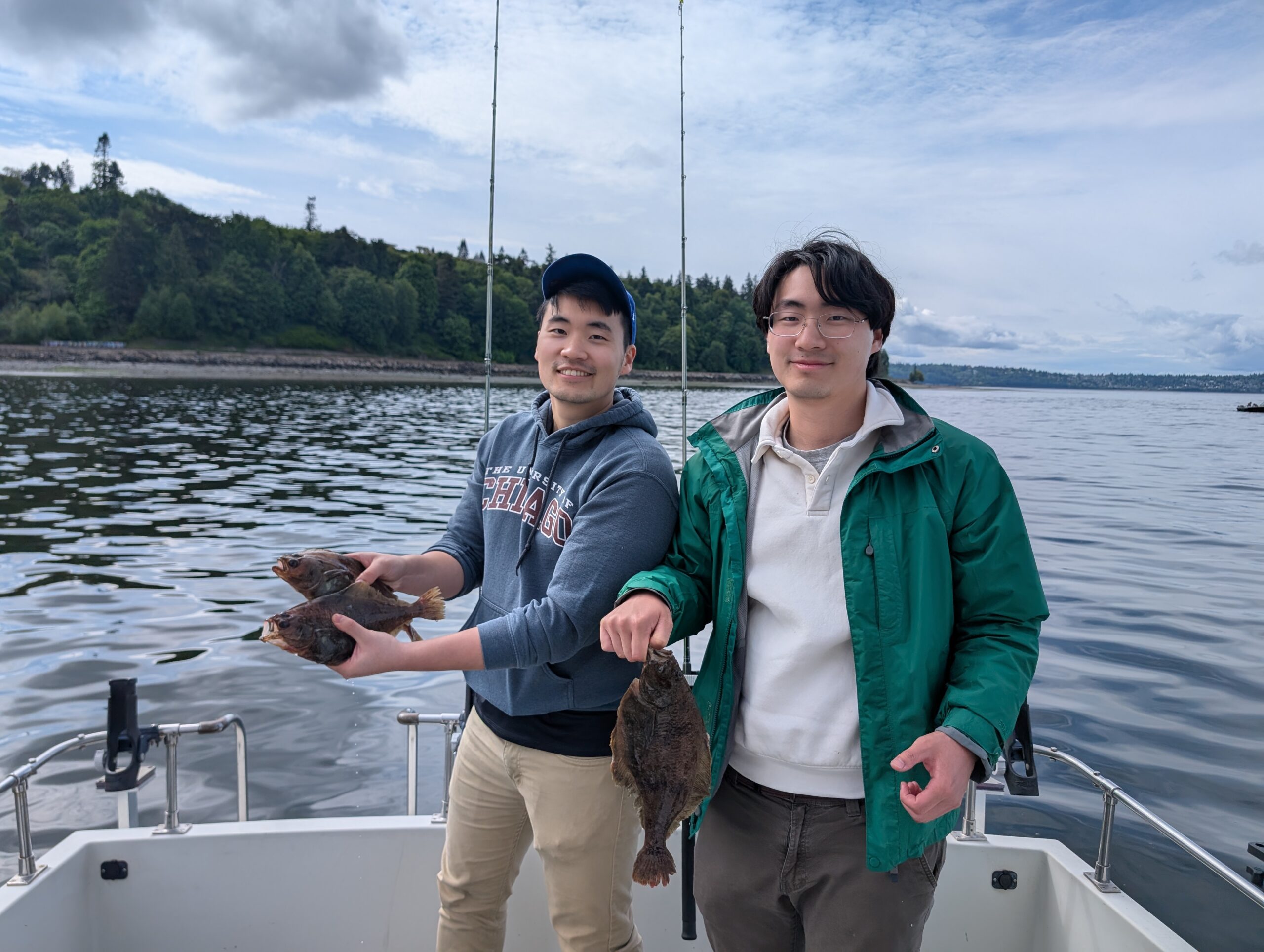
If you’ve just returned from a successful day on the Puget Sound, you are holding some of the finest culinary “treasure” the ocean has to offer. Flounder is often called the “Poor Man’s Halibut,” not because it is lower in quality, but because it offers that same coveted mild, sweet flavor and delicate, flaky texture in a more accessible package. Because flounder is a lean, fine-grained fish, the secret to a perfect meal lies in a light touch and a short cooking time.
Here is how to prepare and cook your fresh-caught flounder to bring out its natural, buttery goodness.
The Preparation: Respecting the Fillet
Unlike the thick, robust steaks of a King Salmon, flounder fillets are thin and elegant.
-
Keep it Cold: Until the moment you are ready to cook, keep your fillets chilled on ice or in the coldest part of the fridge. This keeps the delicate proteins firm.
-
The Dryness Secret: Before seasoning, pat each fillet completely dry with a paper towel. Moisture is the enemy of a good sear. If the fish is wet, it will “steam” in the pan and become mushy rather than developing a golden-brown crust.
-
Simple Seasoning: Flounder has a very subtle flavor that is easily overwhelmed. A light dusting of sea salt, white pepper, and perhaps a pinch of paprika for color is all you need. If you want to use herbs, wait until the very end.
The “Neighborhood” Favorite: Pan-Searing in Lemon Butter
This is the classic way to enjoy fresh flounder. It’s fast, simple, and highlights the “melt-in-your-mouth” quality of the fish.
-
The Flour Dusting: Lightly dredge your dried fillets in a bit of all-purpose flour. Shake off the excess until only a ghost of a coating remains. This creates a “protective shield” that keeps the delicate meat from falling apart.
-
The Heat: Use a heavy skillet (cast iron or stainless steel is great) over medium-high heat. Add a tablespoon of olive oil and a tablespoon of butter. When the butter stops foaming and starts to smell nutty, it’s time.
-
The Sear: Lay the fillets in the pan, working in batches so you don’t crowd the “neighborhood.” Cook for only 2 to 3 minutes per side. Because flounder is thin, it cooks incredibly fast. When the edges look opaque and the bottom is golden, gently flip it with a wide spatula.
-
The Baste: In the final minute of cooking, squeeze half a fresh lemon into the pan and toss in a tablespoon of cold butter and some chopped parsley. Spoon that sizzling lemon-butter over the fish as it finishes.
The “Crispy” Alternative: The Classic Fish Fry
If you have a larger haul of flounder, a light breading and a quick fry is a crowd favorite.
-
The Coating: Dip the fillets in seasoned flour, then an egg wash, and finally into panko breadcrumbs or a fine cornmeal.
-
The Fry: Shallow-fry in about half an inch of hot oil (350°F) for about 2 minutes per side until they look like “golden coins.”
-
The Serving: Serve immediately with homemade tartar sauce and a cold slaw. The crunch of the breading against the silky white meat is perfection.
The “Clean” Option: Parchment Paper Baking
For a healthy, “no-mess” version, try baking the flounder in parchment paper (En Papillote).
-
The Packet: Place a fillet on a piece of parchment paper. Top with thin slices of lemon, a few capers, and a splash of dry white wine.
-
The Bake: Fold the paper into a sealed pouch and bake at 400°F for about 8 to 10 minutes. The fish steams in its own juices, resulting in an incredibly tender and aromatic meal.
The Captain’s Rule: Don’t Over-Cook!
The most common mistake with flounder is leaving it on the heat too long. You know it’s done the second the meat changes from translucent to a solid, snowy white and flakes easily with a fork.
When done right, fresh flounder is a light, elegant meal that rewards the effort of the “hunt.” Whether you sear it, fry it, or steam it, the key is to let the fresh, clean taste of the Puget Sound be the star of the plate. Enjoy your treasure!