Bottom Fish Charters
Seattle / Puget Sound Washington
When and Where To Fish For Bottom Fish
Bottom Fish
Fishing Seasons
In Seattle
Bottom Fish – Peak Season
April – October
Best Locations To Fish
For Bottom Fish
In Seattle / Puget Sound
Marine Area
11
How To Fish For Bottom Fish In Puget Sound
The Vertical Treasure Hunt: How Seattle Charter Boats Fish the “Underground Forest”
While the pursuit of a trophy King Salmon or a hard-fighting Coho often dominates the headlines, there is another world of high-action fishing happening right on the rocky “floor” of the Puget Sound. Bottom fishing—targeting Rockfish, Greenling, and various other reef-dwellers—is the bread and butter of many Puget Sound charters. It is a game of precision, light gear, and constant action that provides the perfect “treasure hunt” for families, beginners, and veteran anglers alike.
On a charter, we leave the miles of trolling behind and focus on “Structure Fishing.” Here is how a professional crew finds and fishes the rocky high-rises of the Sound.
The Strategy: Hunting the “High-Rises”
Bottom fish are homebodies. Unlike salmon that roam the open “highways” of the ocean, bottom fish pick a specific rock pile, ledge, or man-made reef and stay there their entire lives. A charter captain’s most valuable tool for this kind of fishing is a high-definition 3D sonar and a deep knowledge of the “neighborhoods” below.
We look for “Vertical Real Estate”—dramatic changes in the seafloor. Whether it’s a steep underwater cliff off Jefferson Head or the jagged “finger banks” near Possession Point, we are searching for schools of fish that show up as “clouds” or “clusters” hovering just above the rocks. Once we find a productive reef, we use the boat’s engines to “hover” directly over the target, ensuring everyone on the deck can drop their lines straight into the living room of the fish.
The Gear: The “Chicken Rig” Special
On a charter, we want to maximize the action. For bottom fish, we typically use “High-Low” Rigs (often called “Chicken Rigs”). This setup features a heavy lead weight at the very bottom and two small, sharp hooks spaced about 18 inches apart above it.
-
The Advantage: This allows us to fish two different depths of the “porch” at once. It is not uncommon to have a “double-header”—reeling up two bright, colorful fish at the same time!
-
The Bait: We use “cocktails” of small pieces of squid or shrimp. Bottom fish have a powerful sense of smell, and the scent of these snacks drifting through the rocky neighborhood is like ringing a dinner bell.
The Vertical Jig: A More Active Approach
For those who want a more “hands-on” experience, we often deploy Lightweight Vertical Jigs. These are 1-to-4 ounce lead-head jigs with colorful “curly-tail” or “grub” plastic bodies.
-
The Motion: You drop the jig to the floor, reel it up two clicks to avoid snagging the rocks, and then “dance” it up and down. This mimics a wounded baitfish or a small shrimp, triggering an aggressive strike from the larger residents of the reef.
The Conservation Code: The Descending Device
Because many bottom fish are slow-growing and stay in the same neighborhood for decades, we treat them as a precious resource. When fishing in the deep “basements” of the Sound, the change in pressure can affect a fish’s swim bladder if they are brought to the surface.
On every professional charter, we utilize Descending Devices. If a fish is caught that is under the size limit or a protected species, we use a weighted clip to safely send it back down to its specific depth. This ensures the fish can “re-pressurize” and return to its home, keeping the neighborhood healthy for years to come.
The Reward: A Colorful Bounty
By the end of a bottom-fishing trip, the fish box is often a kaleidoscope of colors—vibrant oranges, deep greens, and mottled browns. These fish provide some of the best eating in the Pacific Northwest; their meat is incredibly white, flaky, and mild. Whether you are planning a traditional fish fry or a batch of fresh fish tacos, the “treasure” from the Puget Sound floor is hard to beat.
Fishing for bottom fish on a charter is about constant engagement. It’s about feeling every “tap-tap” on the line and sharing the excitement of a full deck. It is a true “safari” of the Sound that proves the best treasures are often found right at your feet.
FAQ’s
What exactly are we targeting on a general "Bottom Fish" charter?
A general bottom fishing trip is a mixed-bag adventure! We target a variety of species including Starry Flounder, Sanddabs, Rock Sole, and Kelp Greenling. You will also frequently hook and release protected species like Rockfish, which keeps the rods bending all day.
Can we keep the Rockfish we catch on these trips?
No. All species of Rockfish (like Copper, Quillback, and Yelloweye) are strictly catch-and-release only in the Puget Sound to protect their recovering populations. We carry specialized “descending devices” on board to safely return them to the deep pressure zones unharmed.
How deep do we fish for bottom fish?
WDFW regulations restrict bottom fishing to waters 120 feet or shallower in Puget Sound to protect deep-water rockfish. This is a massive bonus for our clients because fishing in shallower water means lighter weights, easier reeling, and more active hand-held jigging.
Is gear included, and do I need advanced fishing experience?
We provide absolutely everything: custom light-tackle rods, reels, bait, and tackle. No experience is required. The captain and deckhand will show you exactly how to drop your line, feel the bottom, and set the hook within the first five minutes of reaching the spot.
What is the best season to book a general bottom fishing trip?
Bottom fish are resident species, meaning they live in the Sound year-round. However, our prime charter season runs from May through September when the weather is warm, the waters are calm, and we can easily combine bottom fishing with our seasonal salmon or lingcod runs.
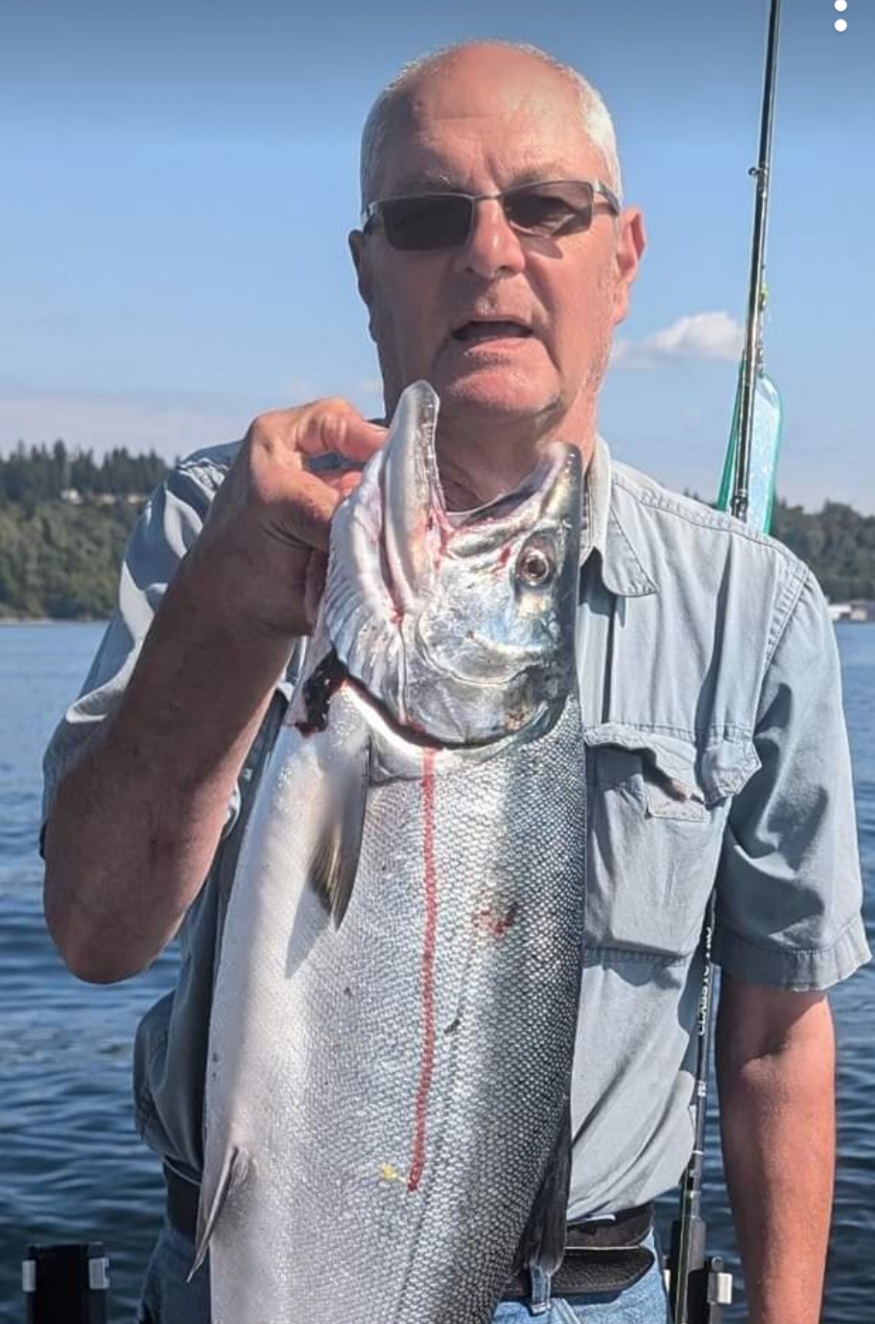


What Kind of Fish Can I Catch On A Charter?
The Kaleidoscope of the Deep: Meet the Bottom Fish of Puget Sound
When you drop a line toward the “basement” of the Puget Sound from the deck of a charter boat, you never quite know what kind of colorful treasure is going to come back up. While the “Big Kings” and “Acrobatic Silvers” get the fame, the diverse neighborhood of bottom fish provides the most consistent action and some of the most vibrant sights in the Pacific Northwest.
On a professional charter, we target a wide variety of species that live among the rocky “high-rises” and sandy “open fields” of the Sound. Here is a field guide to the most common residents you’ll encounter during your trip.
1. The Rockfish: The “Living Jewels”
Rockfish are the most famous residents of the rocky thickets. They come in an incredible array of colors and are known for their slow growth and long lives—some can live to be over 100 years old!
-
Copper Rockfish: These are the most common “neighborhood” residents. They are easily identified by the bright copper-orange streak along their sides and a white belly. They love staying close to the bottom in 40 to 80 feet of water.
-
Black Rockfish: Often found in large “clouds” above the reefs, these fish look a bit like a bass. They are dark grey or black and are much more active than their copper cousins, often suspended mid-water to hunt for small baitfish.
-
Quillback Rockfish: These look like something out of a prehistoric forest, with long, sharp spines on their backs. They are mottled brown and orange and prefer the deep, dark caves of the abyss.
2. The Greenling: The “Chameleons of the Kelp”
Kelp Greenling are often the “gateway fish” for many young fishers on a charter. They live in the shallower rock gardens and kelp forests near the shoreline.
-
The Look: They are sleek and colorful, with the males often sporting bright blue spots on their heads and the females covered in a golden-brown “freckle” pattern.
-
The Experience: They are fast and aggressive for their size. Because they have small mouths, they require a light touch and small hooks. They are a fun, high-energy addition to any fishing trip.
3. The Cabezon: The “Giant Scuplin”
If you reel up something that looks like a grumpy, camouflaged frog with a giant head, you’ve found a Cabezon.
-
The Look: They have no scales and are covered in a mottled skin that mimics the rocks and seaweed. They are the ultimate “Ambush Predators” of the reef.
-
The Experience: Cabezon are pure muscle. When they hit a jig, it feels like a heavy weight, and they will try to “anchor” themselves in the rocks. Note: Their meat is delicious and firm, but their roe (eggs) is toxic to humans, so we always handle them with care!
4. The English Sole and Starry Flounder: The “Flat-Tops”
While the rockfish guard the “hills,” the Sole and Flounder own the “plains.”
-
The Look: These are the masters of disguise, lying flat on the sandy or muddy bottom with both eyes on the top of their heads.
-
The Experience: Fishing for these is a relaxing “drift and bounce” game. They provide a distinct “tap-tap” bite that is incredibly rewarding to master.
5. The “Ghost” Residents: Ratfish and Dogfish
Sometimes, the treasure hunt brings up something a bit more mysterious.
-
Ratfish: These look truly alien, with large “rabbit-like” teeth and big green eyes that glow in the dark. They are harmless but fascinating to see up close.
-
Spiny Dogfish: These are small sharks that roam the Sound in massive “packs.” They are incredibly strong and provide a great fight on light gear.
The Charter Advantage
The beauty of fishing for these different types of bottom fish is the variety. On a single charter, it is common for a group to pull up four or five different species from the same “neighborhood.” Whether it’s a bright orange Copper Rockfish or a mottled Greenling, each one is a unique part of the Puget Sound ecosystem.
Because many of these fish are slow-growing, your captain will help you identify which ones are in season and which ones are “treasures” to be safely sent back to the bottom using a descending device. No matter what comes over the rail, the diversity of the Sound’s basement ensures that every drop of the line is the start of a brand-new adventure!
Will I catch a Tyee King Salmon?
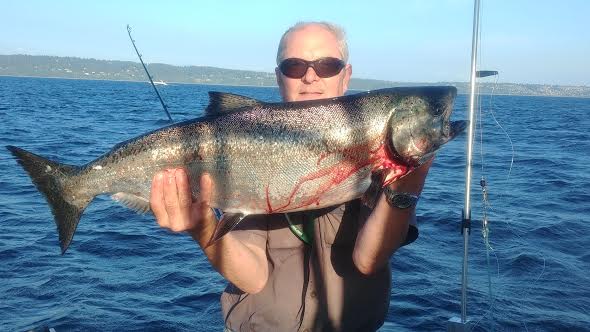
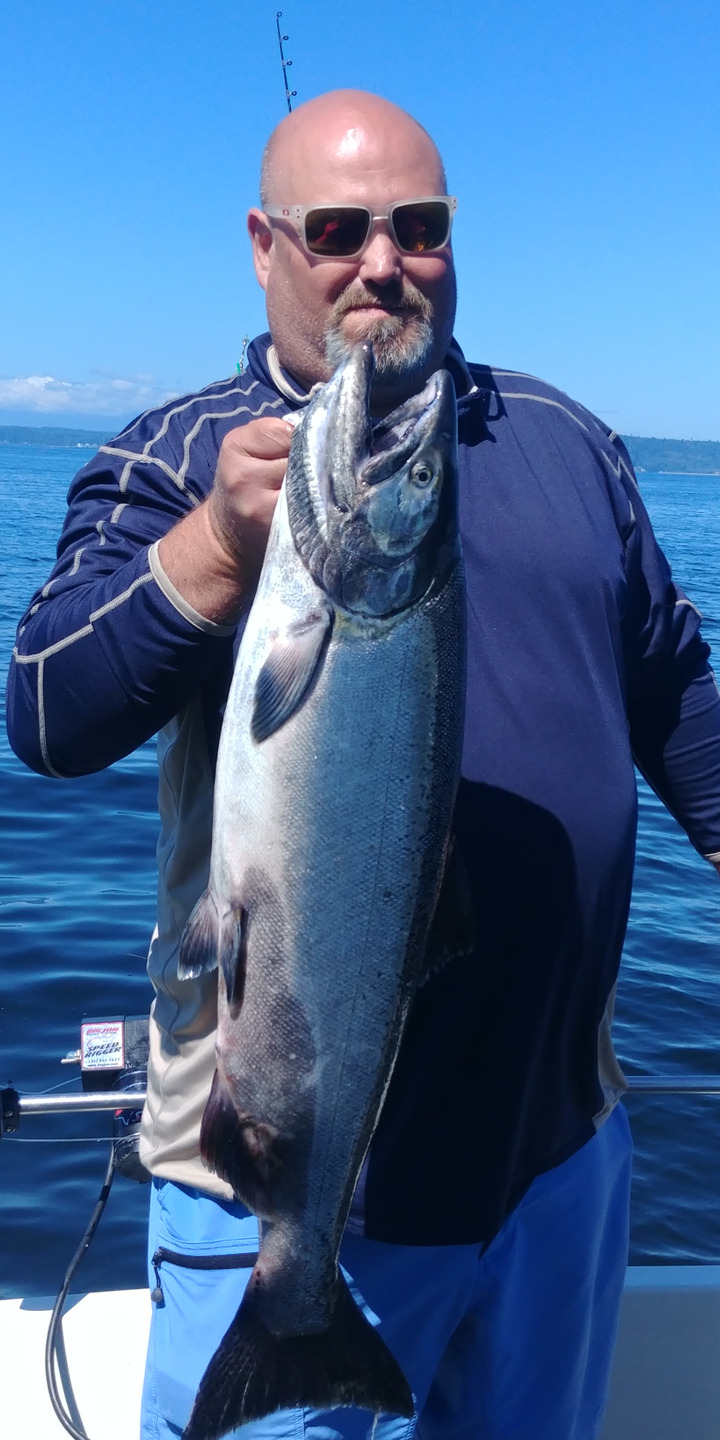
The answer is a definitive maybe. Many fishermen fish for decades and never bring a King Salmon into the boat over 30 pounds where at times a novice fisherman will sometimes catch a Tyee on their first outting.
All I can say is that you don’t hit the ball unless you swing at it.
Think of catching a Tyee as a gift from the Fishing Gods that will be burned into your memory for a lifetime.