King Salmon
Fishing Charters
Seattle / Puget Sound Washington
How To Fish For King Salmon In Puget Sound
Imagine you are going on a treasure hunt in the middle of a giant forest.
Trolling: The “Hunter” Way (Our Favorite!)
Trolling is like being a hunter. Instead of sitting in one spot and hoping a fish swims by, we put the boat in gear and go find them. Think of the boat as a moving base. We use the engine to pull our lures through the water at the perfect speed to mimic a swimming herring. Because we are moving, we can cover miles and miles of the ocean in a single day. If the fish aren’t in one “neighborhood,” we just drive to the next one! It’s like using a magnifying glass to search the whole forest for that treasure instead of just standing by one tree.
Mooching: The “Waiting” Way
Mooching is more like sitting in a tree stand and waiting for a deer to walk under you. You drop your bait straight down and slowly reel it up and down. It can be fun, but if the fish aren’t right under the boat, you’re just washing your bait! We prefer to be the ones on the move, chasing the “Big Kings” wherever they are hiding.
The “Big King” Gear
To catch a King Salmon, you need heavy-duty tools because these fish are the “Kings” for a reason—they are strong!
-
The Rods: These are long and “bendy” (we call it slow action). They act like a giant rubber band. When a King hits the lure at full speed, the rod bends into a huge U-shape to soak up the power of the fish so the line doesn’t snap.
-
The Reels: We use “Level Wind” or “Line Counter” reels. They have a little screen that tells us exactly how many feet of line we have out. If we know the Kings are hanging out 100 feet deep, we can put our bait exactly in their “living room.”
-
The Hardware (The Secret Weapons):
-
Downriggers: These are like underwater elevators. They use a big lead ball to sink our line deep down where the water is cold and the Kings like to stay.
-
The Flasher: This is a big, shiny piece of plastic that spins in circles. It looks like a flashing light underwater. It tricks the King into thinking a whole school of fish is nearby, and it makes them come over to investigate!
-
The Lure: At the very end is a “tasty” looking snack—usually a herring or a sparkly spoon with sharp hooks.
-
By trolling, we are taking the fight to the fish. We use our eyes, our electronics, and our boat to “hunt” them down!

FAQ’s
When is the King salmon season , and what is the daily limit?
Our summer Chinook fishery in Marine Area 9 usually kicks off in mid-to-late July and runs until the state quota is met (often lasting only a few weeks because it’s so popular). The daily limit is typically 1 hatchery Chinook per person (minimum size 22 inches), and all wild Kings with an intact adipose fin must be released.
Are we going to be trolling downriggers or mooching?
We primarily troll using downriggers, flashing flasher-and-spoon or flasher-and-hoochie setups to cover ground and find the schools moving past Possession Point. It’s an incredibly efficient way to keep the gear right in the strike zone where the big Kings feedWe primarily troll using downriggers, flashing flasher-and-spoon or flasher-and-hoochie setups to cover ground and find the schools moving past Possession Point. It’s an incredibly efficient way to keep the gear right in the strike zone where the big Kings feed
How big do the Puget Sound Kings get on your trips?
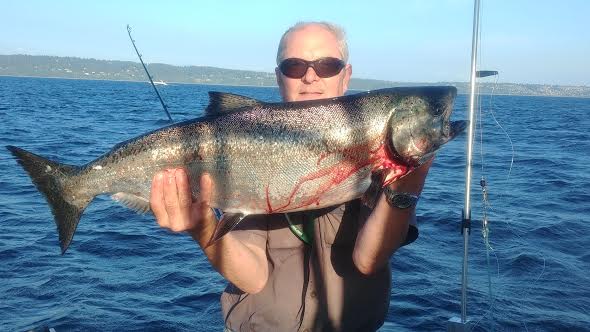
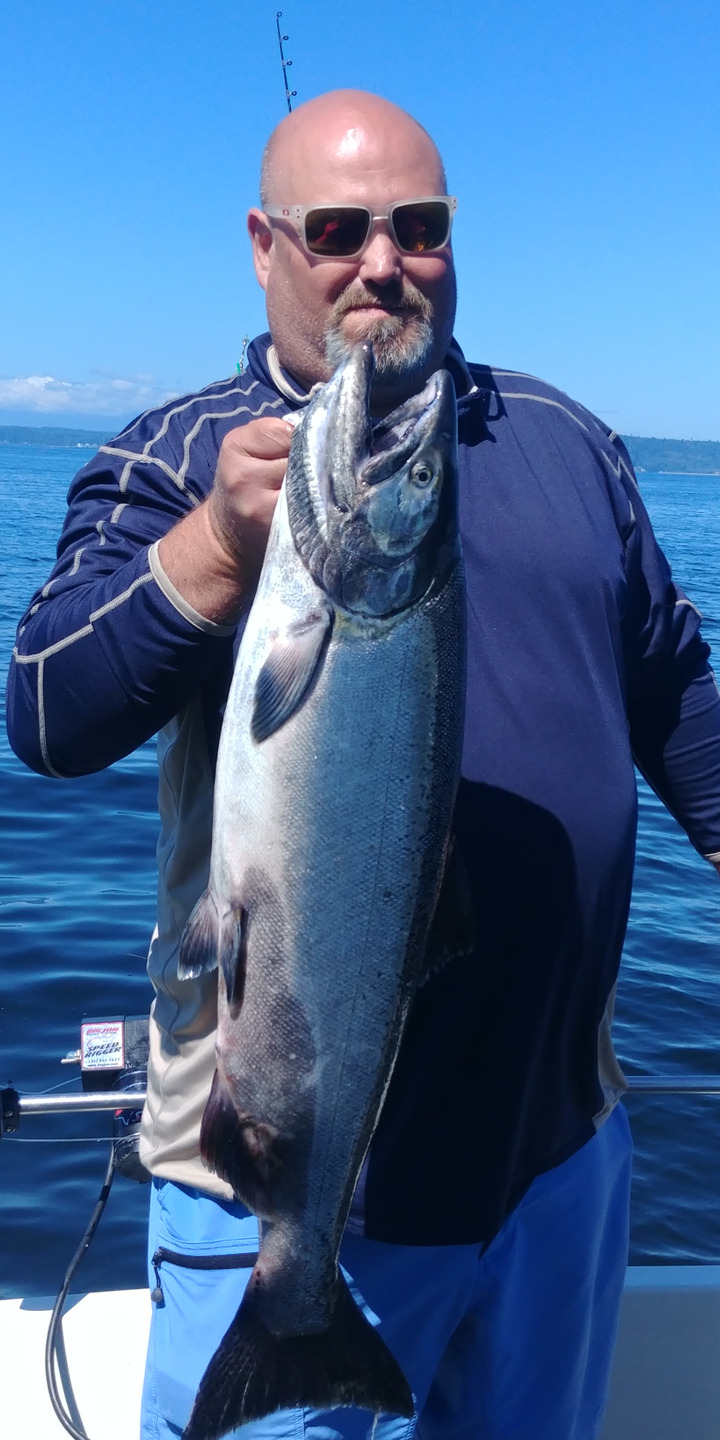
The legal “keeper” Kings we bring to the boat generally average between 10 and 20 pounds. You always have a shot at a “Tyee” (a salmon over 30 pounds), but a 15-pounder is a hard-fighting, beautiful fish for the cooler.
What happens if the King salmon quota closes early?
WDFW manages the King season on a strict encounters quota. If it closes to retention ahead of schedule, we immediately pivot our trips to targeting Coho (Silvers), Pink salmon (on odd years), or premium bottom fish, depending on what else is open. Your day on the water is always secure.
Is a King salmon trip good for young kids?
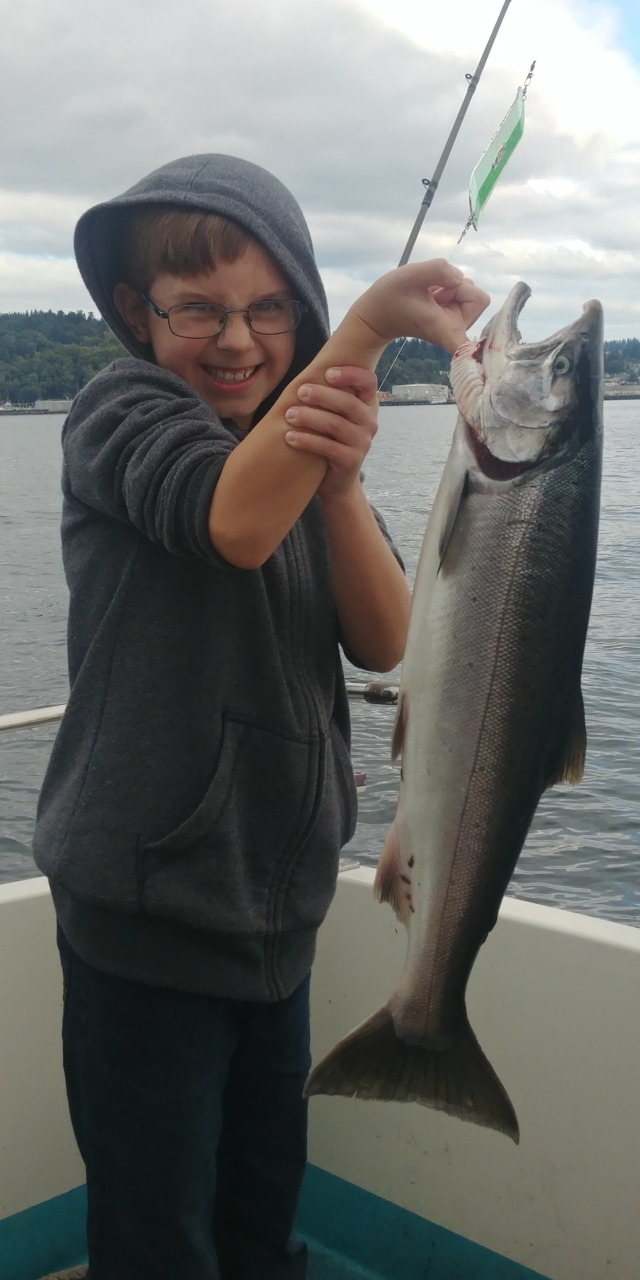
King fishing is a game of patience and heavy anticipation. Because we are trolling and waiting for that one massive strike, there can be some downtime between bites. For very young children, a flounder or pink salmon trip provides faster action, but older kids love the raw power of a King.
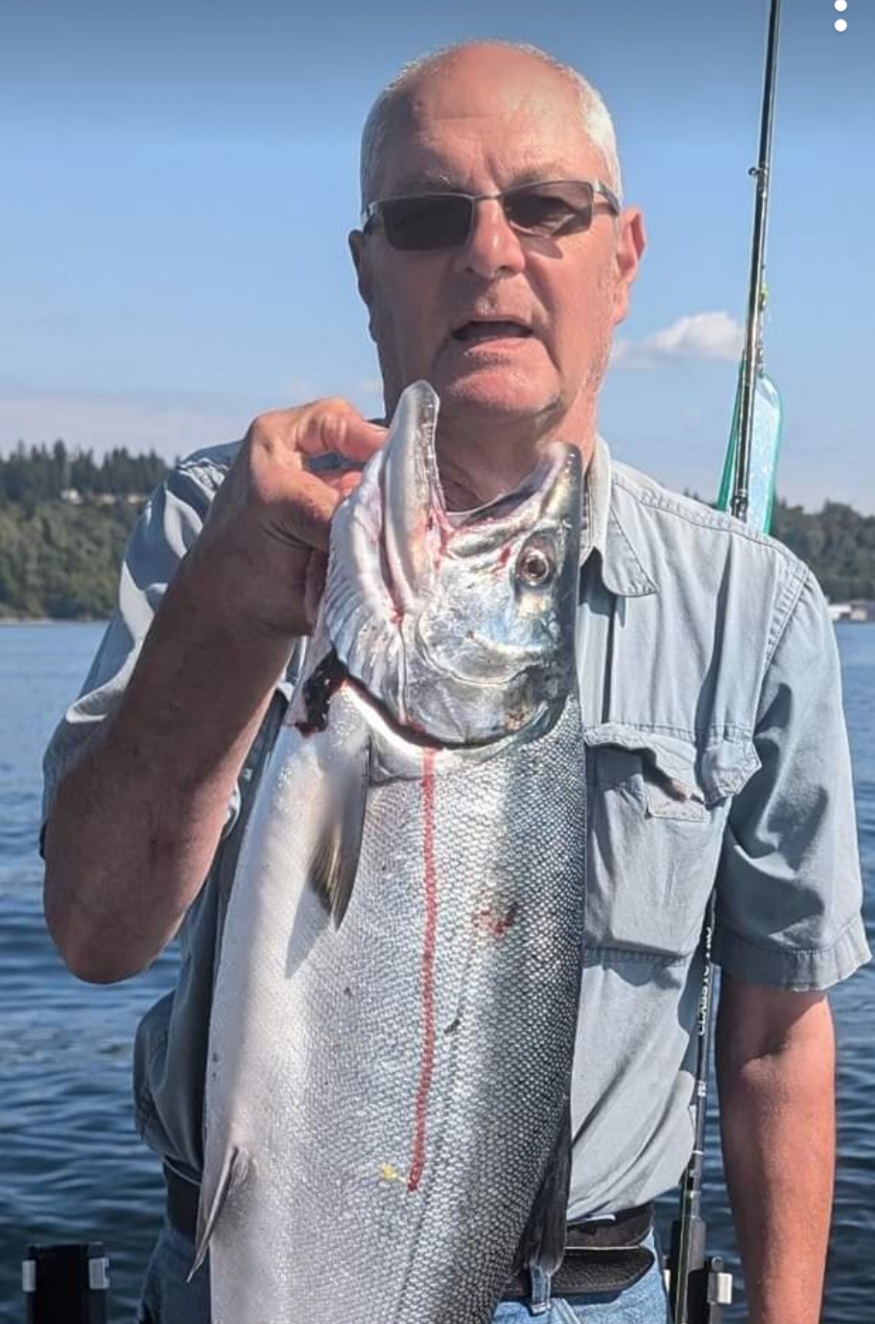

What Is a Tyee Salmon?
What is a Tyee?
A “Tyee” isn’t a different kind of fish; it is a special title given only to King Salmon that weigh 30 pounds or more.
To give you an idea of how big that is, imagine holding three giant bowling balls at once, or a medium-sized dog that is pure, solid muscle. Most salmon are much smaller, so when a King Salmon grows big enough to be called a Tyee, it means it has survived many years in the wild ocean, outsmarting predators like seals and orcas.
Why is it such a huge honor?
Catching a Tyee is like winning a gold medal in the Olympics of fishing. Here is why it’s so special:
-
The “Club” of Legends: Since 1924, there has been a famous group called the Tyee Club. To join, you have to catch one of these giants using very specific, old-school rules (like being in a small rowboat!). Even if you aren’t in the club, telling another fisherman “I caught a Tyee” is the ultimate bragging right.
-
The Ultimate Fight: A 30-pound fish doesn’t want to be caught! It will pull your rod into a giant “U” shape and take a long time to bring to the boat. You have to be patient, strong, and very careful not to let the line snap.
-
A “Once-in-a-Lifetime” Moment: Many people fish their whole lives and never see a Tyee, let alone catch one. When you land one, it’s a moment you and your family will talk about for the rest of your lives.
When you step onto a boat with
Will I catch a Tyee King Salmon?
The answer is a definitive maybe. Many fishermen fish for decades and never bring a King Salmon into the boat over 30 pounds where at times a novice fisherman will sometimes catch a Tyee on their first outting.
All I can say is that you don’t hit the ball unless you swing at it.
Think of catching a Tyee as a gift from the Fishing Gods that will be burned into your memory for a lifetime.